


Butcher’s Guide
Beef Jerky & Sticks
Whole-muscle jerky. Ground-and-stuffed sticks. Made in our Turtle River smokehouse — not in a factory. Stittsworth Meats · Bemidji, MN · Real beef. Real seasoning. Short ingredient list.
Read the back of most gas-station jerky bags and you’ll find mechanically separated meat, added sugar, MSG, and a list of preservatives long enough to fill a paragraph. The reason gas-station jerky tastes flat and chewy in a weird way isn’t in the meat — it’s in the chemistry.
Butcher-shop jerky and sticks are a different category. Real beef, real seasoning, minimal preservatives. The trade is shorter shelf life. Most people consider that a feature.
Jerky. Sticks. Strips.
Jerky
Sliced from whole-muscle beef — usually round or flank. Marinated, then dried.
Chewy. Meat-forward. The original portable protein.
Sticks
Ground beef + seasoning, stuffed into casings, smoked, dried.
Softer texture. More uniform seasoning. Easier on the jaw.
Strips
Wider, flatter jerky cuts. Pulls apart in layers instead of breaking off.
The middle ground. More tender than traditional jerky, more bite than a stick.
How Stittsworth makes it.
- Whole muscle in. Real beef rounds and flanks. No mechanically separated meat. No mystery trim.
- Sliced or ground. For jerky: cut against the grain into uniform strips. For sticks: ground fine and mixed with seasoning blends.
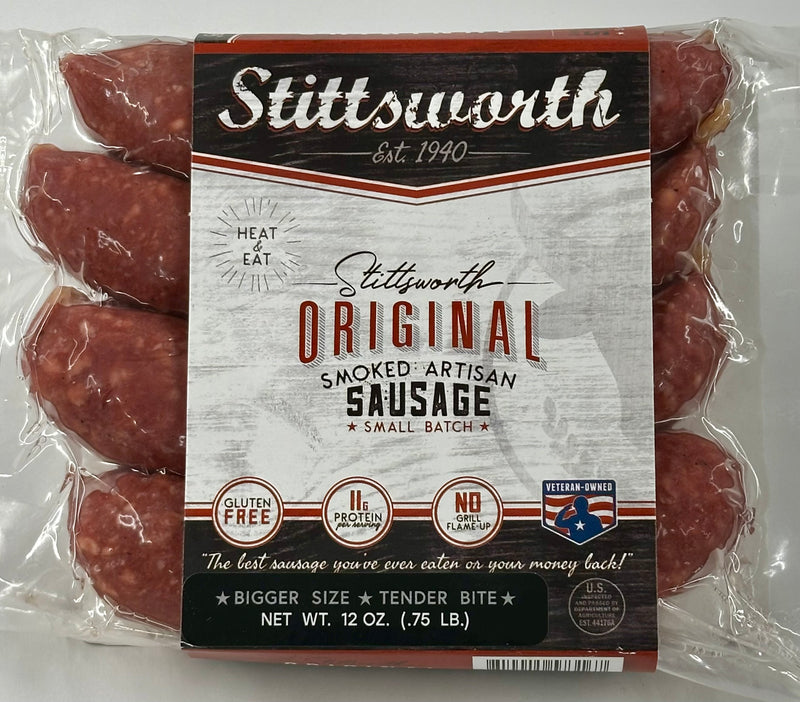
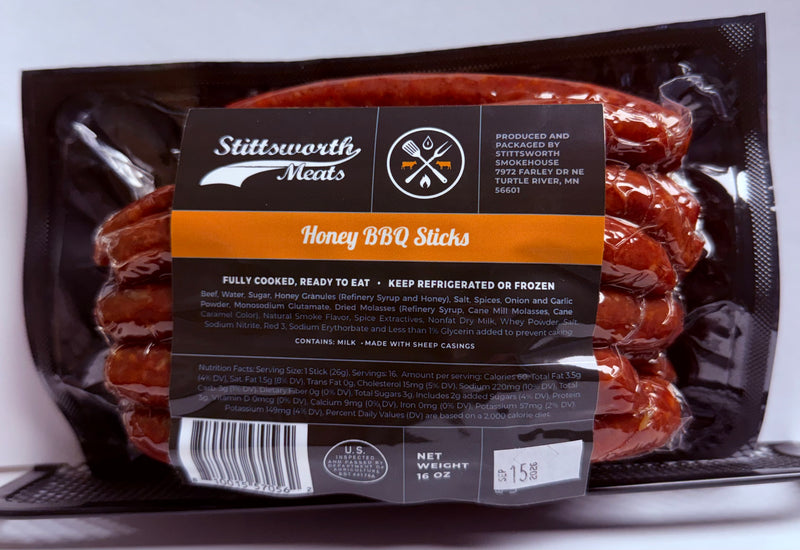
- Marinated or seasoned. House recipes — Original, Peppered, Teriyaki, Honey BBQ. Real soy sauce, real spices. No artificial flavors.
- Smoked low and slow. Hours in the smokehouse at low temp. Real wood smoke, not liquid smoke flavoring.
- Dried to spec. Pulled when texture and moisture hit the right window. Vacuum-sealed for shelf life.
Pick your house favorite.
All flavors available in jerky, sticks, and strips. New customer? Start with the Sampler — lets you try the full lineup before you commit.
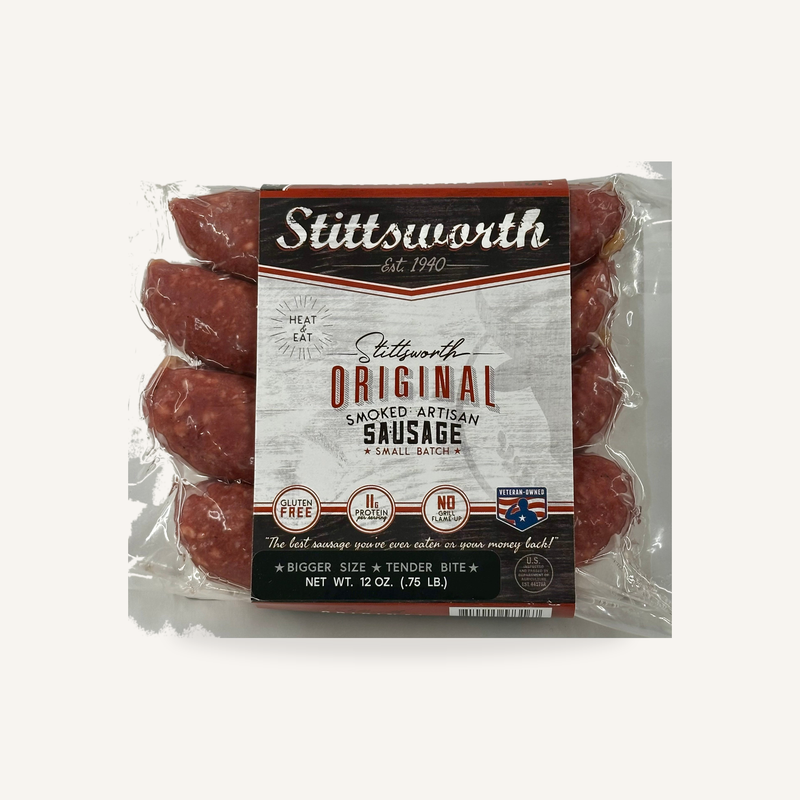
- Original — Clean beef flavor. The benchmark.
- Peppered — Cracked black pepper. Heat without sweet.
- Teriyaki — Sweet-savory. The crowd-pleaser.
- Honey BBQ — Sweet and tangy. Family favorite.
Not mechanically separated. Not gas station chemistry. This is what butcher-shop jerky actually looks like.
What's the difference between beef jerky and beef sticks?
Jerky is sliced from whole-muscle beef, marinated, and dried. Sticks are ground beef mixed with seasoning, stuffed into casings, smoked, and dried. Jerky is chewier and more meat-forward; sticks are softer and more uniformly seasoned.
How long does beef jerky last?
Depends on the style. Shelf-stable jerky holds up to 365 days vacuum-sealed at room temperature. Fresh-style jerky like our beef strips is a refrigerated product — 180 days unopened in the fridge. Opened packages of either are best finished within 2–3 weeks, refrigerated.
Is butcher-shop jerky healthier than gas station jerky?
Generally yes — Stittsworth’s recipes use real beef, real seasoning, and minimal preservatives. Gas station brands often use mechanically separated meat, added sugars, MSG, and stronger preservatives. Short ingredient lists are usually better.
What's the protein content?
Our beef strips deliver 10g of protein per ounce at 60 calories and 1g of fat. Smokehouse snack sticks are a fattier format and run lower, around 3–4g of protein per 26g stick. That’s why they’re a staple for hunters, hikers, and anyone tracking macros.
Do they need refrigeration?
Unopened vacuum-sealed: no. Opened: refrigerate for best shelf life, especially in warm weather.
Real Beef. Real Smoke. Real Short Ingredient List.
Try the lineup.
Why Our Smoked Meats Taste Better
- Five generations
- No Fillers. No Shortcuts.
- Ships frozen from Bemidji. When we ship it, you eat it.